Marketing a business with legal and regulatory complications is no less than navigating a minefield. What is allowed in one state may be restricted in another. Ironically, an industry as vibrant and exciting as gaming often gets covered in shades of grey.
The last few years have been watershed years for the casino industry. Europe—including the UK—has long led the gaming market, but the United States is closing in fast. In 2018, the U.S. Supreme Court’s decision to legalize sports betting was historic. It effectively legalized a $150-billion illegal betting ecosystem and reignited the debate around online betting and games of chance. This ruling created a domino effect across the casino landscape.
Demand also surged. From 2009 to 2019, the U.S. tripled its gross gaming revenue—from $34.3 billion to almost $100 billion. Then came the 2020 pandemic, and suddenly, online casinos became mainstream.
Because of this rapid evolution, the casino industry holds tremendous potential but is also fiercely competitive. With ever-changing regulations, rising digital competition, and the growing importance of casino digital marketing, casinos must rethink their strategies to stay profitable and strengthen relationships with patrons.
Casino Marketing Matters More Than Ever
According to Statista, the U.S. online gambling market is expected to grow to $93 billion by 2023, up from $67 billion in 2022.
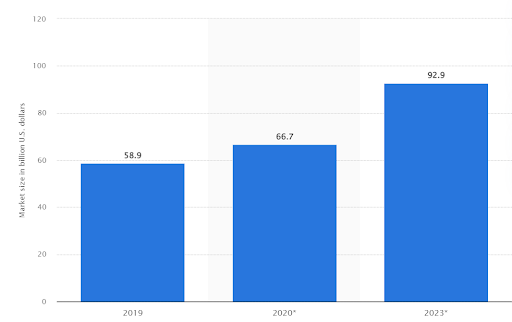
To compete effectively, operators must adopt the right marketing approach—one rooted in casino digital marketing and data-driven insights.
Casinos are now expected to overcome challenges such as rising competition, decreasing ROI, and high player churn. This is where a modern strategy, supported by digital marketing for casinos, becomes essential.
Rising Competition
Relaxed regulations around games of chance and sports betting continue to expand the competitive landscape. Established operators and new entrants alike are expected to launch innovative offerings.
The growth of digital gaming has also lowered barriers to entry. With minimal capital and industry knowledge, new players can enter the market. As competition increases, customers now expect engaging gaming experiences, compelling promotions, and new games.
ROI Is Still King
ROI remains non-negotiable. Without ROI, there is no investment—and without investment, casinos fall into a downward spiral of stagnation.
Not all casino games generate equal returns. RTP% varies across slots, card games, roulette, wheel-based games, online poker, and other formats. Casinos must strike the right game mix to balance margins while meeting player expectations.
Research suggests generational differences also influence revenue. While boomers and Gen Xers focus more on gaming, millennials spend more on non-gaming amenities. With strong casino marketing analytics, these decisions can now be backed by real-time insights.
Player Churn Remains a Significant Challenge
Many casinos still lack the analytical systems needed to identify and segment customers based on past behavior. The rules of the industry have changed. To succeed, operators must embrace digital marketing for casinos that prioritizes personalization and targeted engagement.
Player Lifetime Value (LTV) frameworks and churn-reduction strategies have now become strategic imperatives. Retaining players is far more valuable than constantly replacing them.
Marketing plays a central role in solving this challenge.
Marketing to the Rescue
Every successful business has used marketing to scale. Historically, casinos relied on traditional methods—floor design, lighting, architecture, food quality, VVIP programs, and well-designed rewards—to encourage players to stay, spend, and return.
These were supplemented by loyalty programs, free starting chips, holiday discounts, hospitality partnerships, and tournaments.
However, the pandemic, rapid digital adoption, and the explosion of social media have pushed casino marketing online. Today, casino digital marketing defines how casinos attract players, measure impact, and compete.
Casino Marketing Strategy Is Now Digital
With the gaming industry steadily moving online, its operational and marketing processes have transformed. Grand View Research predicts the online gaming market will grow at a CAGR of 11.5% from 2020 to 2027.
Given these shifts, relying solely on traditional marketing is no longer practical—especially when there is no reliable way to measure campaign effectiveness.
Casino owners must now adopt digital-first approaches. Across industries, businesses are moving online to improve audience targeting and strengthen their brands. According to Gartner, 72.2% of a company’s marketing investment now goes to digital channels.
If every other industry is benefiting from digital, casinos should too.
A major advantage of digital marketing for casinos is the availability of real-time data. Unlike traditional channels—where data is scarce or unreliable—digital platforms provide measurable results and scientific decision-making.
A strong digital casino marketing strategy typically includes:
Website and Mobile Experience
Casinos, whether online or land-based, need a strong and user-friendly online presence. Modern users expect digital experiences like those on Instagram, Airbnb, DoorDash, and Snapchat. The standard for usability is now extremely high.
Investing in design, UX, mobile architecture, website CMS, and the digital delivery stack is essential. Improved user experience not only retains customers but also helps casinos rank higher on search engines and app stores.
Influencer Marketing
Influencer-driven promotion has reshaped how brands reach audiences. Instead of spending millions on celebrity endorsements, businesses now tap into niche creators with engaged communities.
Casino brands can apply this tactic too. For example, the YouTube channel Blackjack Apprenticeship produces content directly related to blackjack strategies—a strong match for casinos seeking targeted partnerships.
User Reviews
Reviews influence business decisions more than ever. Customers research extensively before spending, and negative reviews can severely impact trust.
According to Dixa, 86% of customers hesitate to engage with companies that have poor online reviews. For casinos—where perception and credibility matter enormously—review management cannot be ignored.
Data Fuels Digital Casino Marketing
Online marketing blends strategy with data analytics. High-end algorithms power digital assets and help produce optimized campaigns. This is also where casino marketing analytics becomes critical for predictive, personalized engagement.
Predictive Analytics
Traditional casino analytics tools are backward-looking. They segment customers based on past behavior but fail to:
- Identify future high-value players
- Target infrequent players
- Keep marketing offers fresh and relevant
A predictive model, such as Recency–Frequency–Monetary (RFM), solves these gaps. By running different offers for different customer groups, AI models learn which offer works for which player. They can also identify dormant customers who may convert into high-value segments.
Floor Optimization
Just as retail stores place impulse buys near the exit, casinos can optimize floor layouts using data.
Since slot machines generate a significant portion of revenue, AI models can analyze game trends, seasonality, pricing, machine placement, time of day, and historical performance. Based on this, they recommend the ideal mix of games for maximum engagement and profitability.
Game Recommendations
Personalization is one of the strongest competitive advantages. Think of Spotify—its recommendation engine keeps users engaged and returning.
Casinos can do the same. With high engagement and monetary incentives, players generate rich behavioral data. This allows AI systems to recommend games that fit individual preferences.
Player Development
Player development typically includes outbound sales, customer interactions, and administrative tasks—each with varying value.
With casino marketing analytics, systems can track host activities, analyze outcomes, and recommend the most effective approach for each VIP customer. For example, if data shows a player is 95% likely to respond to an in-person visit rather than an email, the host can adjust immediately.
AI can also identify at-risk players, predict reasons for churn, and suggest targeted retention campaigns.
Digital and Data Will Demand Effort
Digital transformation is already reshaping the casino industry. Growth-oriented casinos have started adopting digital tools, data analytics, and modern marketing strategies. Leadership commitment is essential because transformation requires investment, technology, talent, and consistent project execution.
There is no alternative. The question today is simple:
Are casinos ready?